
Why the Founder Is the First Growth Channel
Listen to this article
Narrated version · about 10 min
The short answer
Before a startup has a growth team, the founder is the growth team. They sell, market, write, recruit, support customers, learn objections, shape the product narrative, and create trust before the company has earned brand recognition. As the company scales, teams and systems take on more of the execution. But the founder's role in growth does not disappear. It shifts from doing every task to creating leverage through narrative, customer insight, trust, hiring, category POV, and content that compounds
- The founder is the first growth channel because early startup growth depends on founder-specific knowledge that cannot yet be separated from the person building the company
- In the early days of a startup, the founder is not one function
- Most founders wait too long to create content because they think content requires a mature marketing function
- The founder should not be doing everything forever
- Founder content works best when the founder owns the parts nobody else can fake
Definition: a founder is the first growth channel when their direct work creates the company's earliest distribution, trust, sales conversations, customer learning, recruiting signal, and market narrative before those responsibilities become owned by dedicated teams
Most founders think content becomes important once the company is ready to "scale marketing."
That is backwards
Content matters early because the founder is usually the company's first growth channel
Before there is a marketing team, the founder is explaining the market
Before there is a sales team, the founder is handling objections
Before there is a customer success team, the founder is learning where the product breaks
Before there is a brand, the founder is the trust signal
This is the part most content advice misses. Founder-led content is not just a distribution tactic. It is the public version of work the founder is already doing privately every day
Sales calls. Investor conversations. Hiring pitches. Customer onboarding. Product feedback. Category education. Market POV
The founder is already producing the raw material. The question is whether that knowledge stays trapped in calls and meetings, or becomes a growth asset the market can see
What "founder as the first growth channel" means
The founder is the first growth channel because early startup growth depends on founder-specific knowledge that cannot yet be separated from the person building the company
That includes
- Why the product exists
- Which customer pain is urgent enough to buy for
- Why the category is changing now
- Which objections keep slowing deals down
- Which product decisions create trust
- Why a candidate should join before the company looks obvious
- Why investors should believe the market is bigger than it currently appears
This is why founder content is so powerful for B2B startups. It turns private founder knowledge into public distribution
When a founder publishes consistently, the market gets repeated exposure to how the founder thinks, what the company believes, and why the problem matters. That exposure creates familiarity before the sales call, credibility before the pitch, and trust before the brand is mature
That is the practical answer
The strategic answer is simpler
Founder content lets one founder conversation travel farther than one call
The founder is the first growth system
In the early days of a startup, the founder is not one function
They are the function stack
They are sales because nobody else knows the customer pain deeply enough
They are marketing because nobody else can explain why the company should exist
They are content because nobody else has the stories, opinions, scars, and conviction yet
They are product feedback because every buyer conversation becomes roadmap input
They are recruiting because early candidates are not joining a polished company. They are joining a belief system
They are customer success because the first customers need trust before process
This is why founder-led growth feels so manual at the beginning. It is manual. It has to be
The company has not yet earned the right to automate trust
And this is where content becomes unusually powerful. A founder who posts consistently is not "becoming a creator." They are turning the company's earliest growth conversations into reusable market-facing assets
One sharp post can do work that used to happen only one-to-one
- It can answer a buyer objection before the sales call
- It can explain the company's point of view before a demo
- It can make candidates understand the mission before an interview
- It can help investors see how the founder thinks before a meeting
- It can teach the market how to evaluate the category
That is not vanity
That is leverage
For B2B founders, especially in SaaS, AI, fintech, devtools, healthcare, and other trust-heavy categories, this is often the first repeatable marketing motion. Not because LinkedIn is magic. Because founder insight is scarce, and scarce insight earns attention
Why founder content matters before there is a content team
Most founders wait too long to create content because they think content requires a mature marketing function
It does not
It requires a founder with a clear point of view and a system for capturing it
The best founder content usually comes from the conversations already happening inside the business
- The objection a buyer repeats three times in one week
- The market misconception the founder keeps correcting
- The hiring pitch that finally makes a senior candidate lean in
- The investor question that reveals what the market still does not understand
- The product decision that explains what the company refuses to compromise on
- The customer story that proves the pain is real
None of this starts as "content."
It starts as company-building
That is why founder content often outperforms brand content in early and growth-stage companies. Brand content tends to explain what the company does. Founder content explains why it matters, why now, why this team, and why the market should pay attention
People do not trust a young company because it has a polished content calendar
They trust it because the founder sounds like someone who has seen the problem up close
That is also why generic AI content usually fails for founders. It removes the exact thing the market wants from them: lived context
What changes as the company scales
The founder should not be doing everything forever
That is not the argument
As the company grows, the work changes
Sales becomes a team
Marketing becomes a function
Content becomes a system
Customer success becomes a motion
Hiring becomes more structured
The founder stops being the only person carrying every task. Teams and systems take on more of the operating load
But in many founder-led companies, the founder still carries the moments that matter most
- The category narrative
- The highest-stakes customer conversations
- The company point of view
- The hiring bar
- The investor story
- The urgency
- The taste
- The ability to say what the company is not
This is the distinction that matters
The founder should delegate execution
The founder should not delegate conviction
When founder-led companies scale well, the founder's knowledge does not disappear into a larger org chart. It gets translated into systems other people can run
Content is one of those systems
The goal is not to keep the founder trapped in every workflow
The goal is to keep the founder's insight moving through the company and into the market
The work founders should keep owning
Founder content works best when the founder owns the parts nobody else can fake
Not scheduling
Not formatting
Not cutting clips
Not turning one idea into twelve assets
Those can be delegated
The founder should own the strategic inputs
1. The point of view
What do you believe that your market has not accepted yet
This is the center of founder content. Not tips. Not motivational posts. Not generic industry commentary
A founder's point of view should make the market smarter about the problem the company exists to solve
2. The customer truth
What are buyers saying when nobody is performing for a case study
The strongest founder content often comes from sales calls, onboarding calls, churn conversations, support threads, and investor pushback. These moments reveal the language of the market
If the founder is close to customers, content becomes sharper
If the founder is distant from customers, content gets generic fast
3. The narrative
What story helps the market understand why this company should exist now
A startup is not just selling a product. It is selling a version of the future where the product becomes obvious
Founder content helps build that future in public
4. The standards
What does the company refuse to become
This is underrated. Great founder content is not only about what the company does. It also clarifies what the company will not do
The best founders create trust by having taste, edges, and constraints
5. The signal
What should buyers, candidates, investors, and partners remember after seeing the founder's name five times
Content compounds when the market starts associating the founder with a specific problem, category, or belief
That association is not built in one viral post
It is built through repeated signal
This is the difference between a founder who posts and a founder who compounds
The founder content operating model
The failure mode is thinking founder-led content means founder-produced content
It does not
Founder-led content means the founder's thinking leads the content
The production system can be supported by other people
For most B2B founders, the operating model looks like this
- Capture the founder's raw thinking weekly
- Mine sales, customer, product, hiring, and investor conversations for ideas
- Turn those ideas into clear posts, essays, carousels, and talking points
- Keep the founder's voice intact
- Publish consistently
- Feed comments, replies, and market reactions back into the next round of ideas
The founder should not need to spend ten hours a week staring at a blank page
But the founder does need to stay close to the ideas
The best system is usually a hybrid
The founder owns the voice, judgment, stories, and point of view
The content operator owns research, structure, drafting, repurposing, publishing, and consistency
That is how founder content becomes an operating function instead of a recurring guilt loop
A practical weekly workflow
For a founder-led content system, the weekly workflow can stay simple
- Record one 30-minute founder interview
- Pull three to five ideas from sales calls, customer calls, investor questions, or product decisions
- Draft one flagship LinkedIn post from the strongest idea
- Repurpose the same idea into shorter posts, comments, newsletter sections, or sales enablement copy
- Review the founder's language for accuracy and voice
- Publish, respond, and save market reactions for the next week's content
The founder does not need a bigger content burden
They need a better content capture system
What the data can and cannot tell us
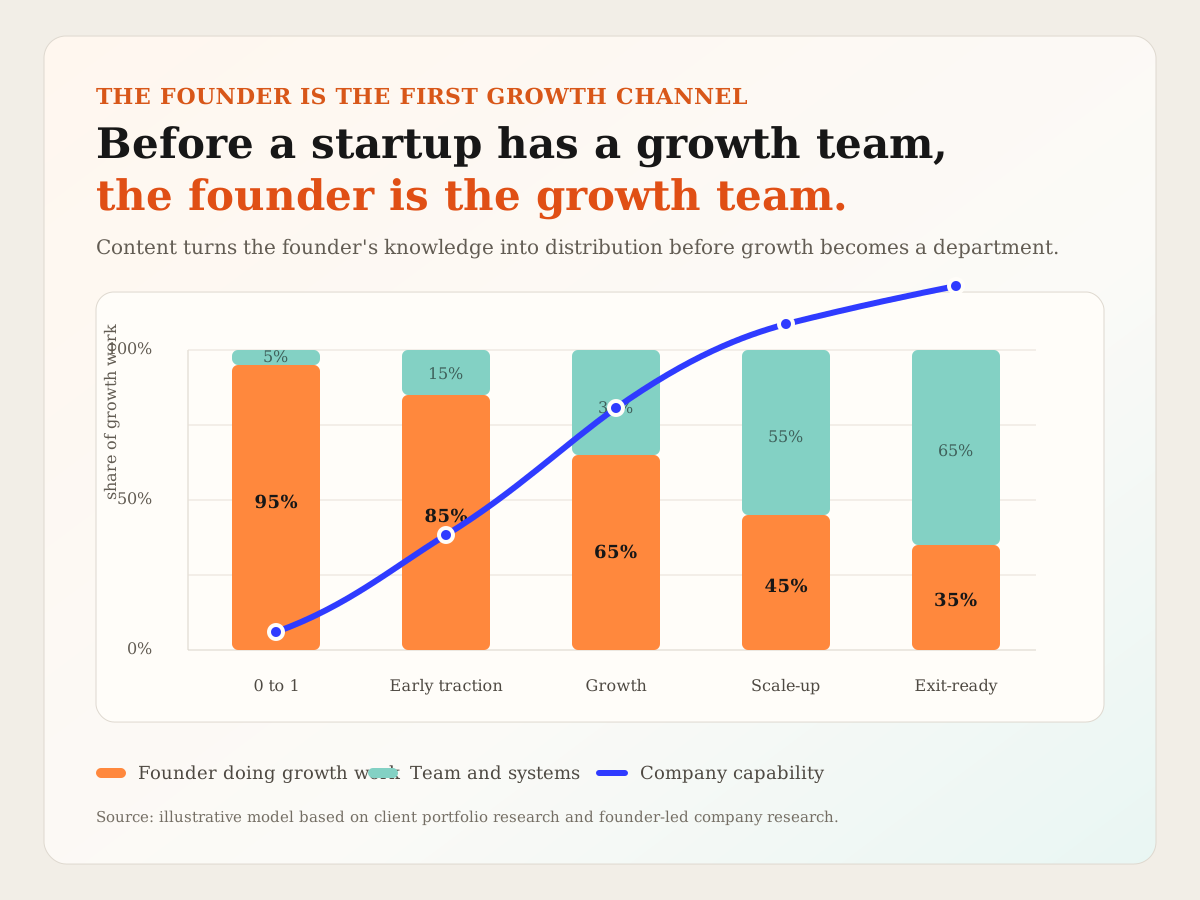
There is no universal dataset that says the founder does exactly 95% of growth work at 0 to 1, 65% at growth stage, or 35% near exit
That would be fake precision
The exact split varies by company, category, founder, ACV, sales motion, market maturity, and team design
But the broader pattern is well supported
Founder-led companies often benefit from stronger owner mindset, customer obsession, long-term orientation, and clearer mission
Bain's Founder Mentality research argues that sustainable growth is often tied to preserving insurgent mission, frontline obsession, and owner mindset as companies scale
Academic research on founder-CEOs is mixed in the details, but several studies find positive associations between founder leadership and performance, survival, innovation, or long-term orientation in specific contexts. Other research finds founder-led companies can underperform on formal management practices, which is exactly why the point is not that founders should do every task forever
The better claim is this
Founders create early growth manually. As the company scales, teams should absorb more execution. But the founder's narrative, customer insight, and public trust remain high-leverage growth assets
That is the model
How this model was built
The chart behind this post is an illustrative model based on two inputs
- Patterns from Invisible Keyboard's client portfolio of founder-led companies
- Broader research on founder-led companies, founder mentality, and founder-CEO performance
The percentages are not presented as a universal benchmark. They are a directional way to show a pattern we see repeatedly: founders carry a very large share of early growth work, then teams and systems absorb more execution as the company matures
The useful takeaway is not the exact number
The useful takeaway is that founder-led growth starts hands-on, then becomes leverage
Frequently asked questions
What is founder-led content
Founder-led content is content built from the founder's real thinking, customer insight, market point of view, and company-building lessons. It can be published on LinkedIn, X, a blog, a newsletter, podcasts, or video. The defining trait is not the format. It is that the founder's judgment leads the content
Should every founder create content
If the founder sells to a market that requires trust, education, hiring, capital, category creation, or long sales cycles, yes. The format can vary. Some founders should write on LinkedIn. Some should run X. Some should publish essays, appear on podcasts, or record short videos. But the founder's thinking needs a distribution surface
Is founder content just personal branding
No. Personal branding is the shallow framing. Founder content is a business asset when it is connected to pipeline, recruiting, investor trust, category education, and market narrative. The goal is not to make the founder famous. The goal is to make the market trust the company faster
Why is founder content important for B2B startups
Founder content is important for B2B startups because B2B buying is trust-heavy. Buyers need to understand the problem, the category, the risk, the team, and the point of view before they commit. Founder content helps create that trust before the sales process begins
What should founders post about
Start with the conversations already happening inside the company
- Customer objections
- Founder lessons
- Market misconceptions
- Product tradeoffs
- Hiring beliefs
- Category POV
- Investor questions
- What the company is learning before the market catches up
If the post could be written by any competitor, it is probably not founder content yet
Is LinkedIn still the best channel for B2B founder content
For many B2B founders, yes. LinkedIn is usually the strongest starting point because it reaches buyers, operators, investors, and candidates in a professional context. X can be useful for technical categories, real-time commentary, and peer networks, but LinkedIn is often the default channel for pipeline, recruiting, and investor signal
How much time should the founder spend on content
Less than most founders fear, but more than zero. The founder should spend enough time to provide raw thinking, review for voice and accuracy, and engage with meaningful replies. The rest can be systematized. For many founders, that means a weekly capture session plus lightweight review, not a full writing workload
When should a founder start
Earlier than feels comfortable. If you wait until the company has a polished marketing function, you miss the stage where founder content is most valuable: when the market is still learning what problem you solve, why it matters, and why you are the team to solve it
What happens when the company has a full marketing team
Founder content should become more strategic, not disappear. The team can own the calendar, production, repurposing, analytics, and distribution system. The founder still supplies the judgment, stories, market read, and sharpest point of view. That is the difference between content that sounds like a department and content that sounds like leadership
Can a founder outsource content without losing authenticity
Yes, if the founder keeps owning the raw thinking. The mistake is outsourcing the point of view. The better model is to delegate capture, research, drafting, editing, repurposing, and distribution while the founder stays close to the ideas, stories, and final judgment
The shorter version
Before a startup has a growth team, the founder is the growth team
They are sales, marketing, content, customer learning, recruiting, and trust
As the company scales, teams and systems take on more of that work. But the founder's role in growth does not disappear. It becomes leverage
Founder content matters because it turns what the founder is already learning, saying, and repeating into distribution the company can compound
The founder does not need to produce every asset
But the founder's thinking needs to lead
That is how content moves from "posting online" to a real growth function
If you want to turn founder knowledge into a repeatable content system without adding ten hours a week to the founder's calendar, that is the operating function Invisible Keyboard runs for B2B foundersSee how it works
Further reading
BainFounder's Mentality Survey
NBERAre Founder CEOs Good Managers
Journal of Business VenturingDo founders matter
Invisible KeyboardThe Real Cost of Founder-Led LinkedIn Content
Invisible KeyboardLinkedIn vs. X for B2B Founders in
Invisible KeyboardBest Time to Post on LinkedIn for B2B